My clients have well-styled Airbnbs, and I’m grateful they keep bringing me in to take photos for them.
This place is pretty special. It is New Farm a classic Australian house mixed with a modern extension. It blends vintage charm with modern luxury, within walking distance of the CBD, so it really feels like an authentic Brisbane stay.
The coolest part is how the old and new buildings connected together. It feels like two houses in one, linked by massive undercover driveway or garage that can fit up to seven cars.
However, it isn’t really about photography.
What made it stand out was how committed the clients were to doing something different. They wanted the photos to feel unique instead of getting lost among other Airbnbs online.
And that’s the kind of project I love. I’m really into advertising photography, and anytime I get a chance to experiment and try something different, I get excited about it.

I usually shoot Airbnbs around sunset sometimes sunrise, depending on the location and whether it works with clients schedule. Basically, I try to shoot when the sun isn’t blasting straight through the windows, creating harsh shadows and blowing out the view outside. Especially if the property actually has a great view.

But this one was different. The client wanted night photography to create warm, cozy, almost incandescent glow throughout the space. The goal was to make the place feel inviting and stand out from other listings, while keeping that high-end interior photography look.
I know that warmer photos just sell better. Anyone who’s worked with Airbnb or even just experimented with photos probably already knows how important images are.
For those who don’t, I can make a video explaining it and sharing my own story about improving the photos and the listing of my own Airbnb, and it increased bookings by about 40% without changing the rate at all. If that’s something you’d want to hear about, let me know in the comments or hit the like button so I know people are interested.
The tricky part with the warm look is getting the balance right.

Warmer images has more yellow, but yellow is a dangerous colour in interior photography. If you push it too far, things that are supposed to look clean and white like bedding, towels, or appliances can suddenly look old, dirty and faded.
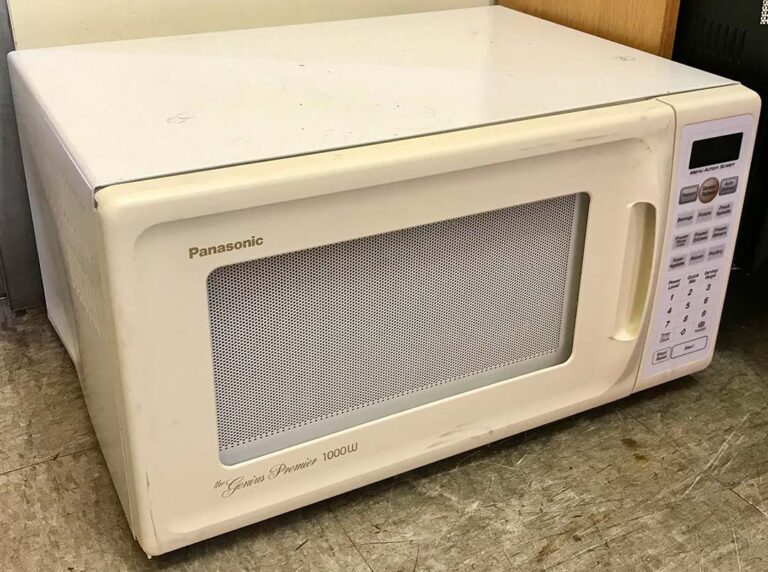
So I have to be really careful with the tones. I want the space to feel warm and cozy but still rich clean modern and premium at the same time.
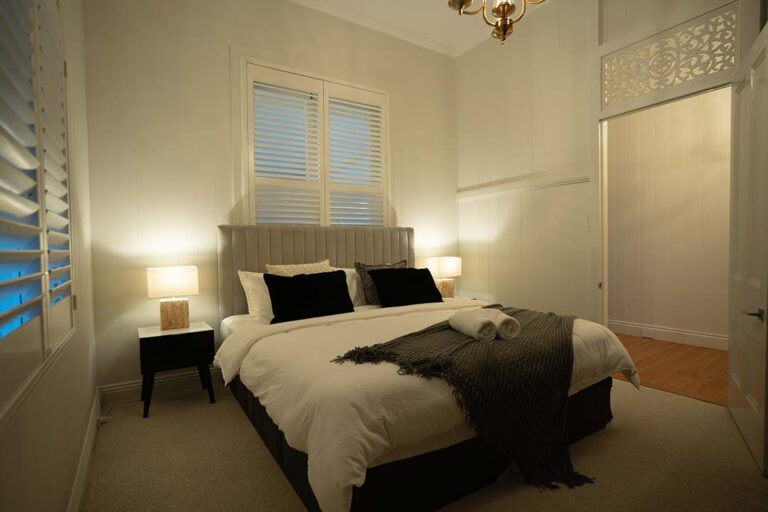
Here’s the raw photo exactly how it came out of the camera at the night. And honestly, it looks fine — the interior looks nice, the staging works, but overall it feels a little generic. The walls look pretty white, maybe slightly warm, but the whole image gives feeling the room is a bit dark and missing light.
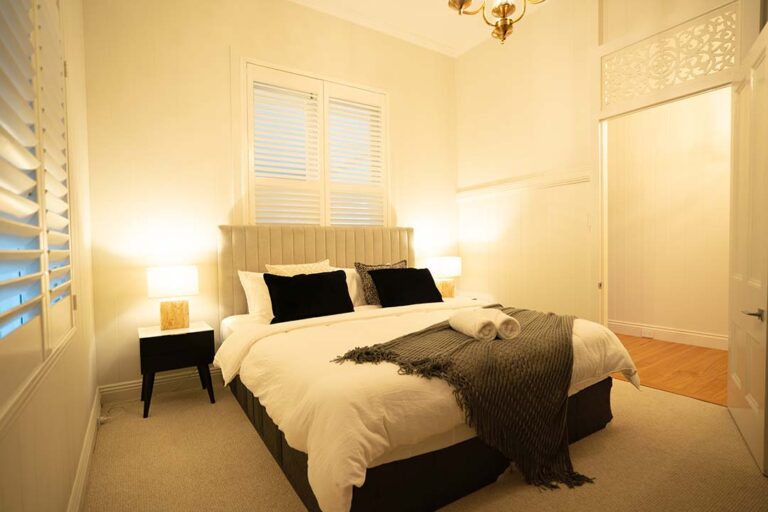
Once we added a bit more brightness and pushed the warmer yellow tones, I think the image started to feel better. Thankfully, it doesn’t give the dirty or outdated look — the place is freshly renovated, so everything feels clean and fresh. But even then, adding yellow on its own doesn’t automatically create that cozy, warm feeling.
At this point, you can definitely tell the lamps are warm, little details start standing out more — like wrinkles in the blanket. Even the headboard starts to feel slightly faded in places, although overall it still looks really good. We’re also losing some detail in the shadows — the footboard just turns into a black shape, and the texture of the black velvet pillows disappears completely. The walls also start to feel a bit off, almost like they’re leaning, and the corners go noticeably darker. All of that together can make the space feel a bit less polished, almost like a pretty average Airbnb listing instead of something more professional and high-end.
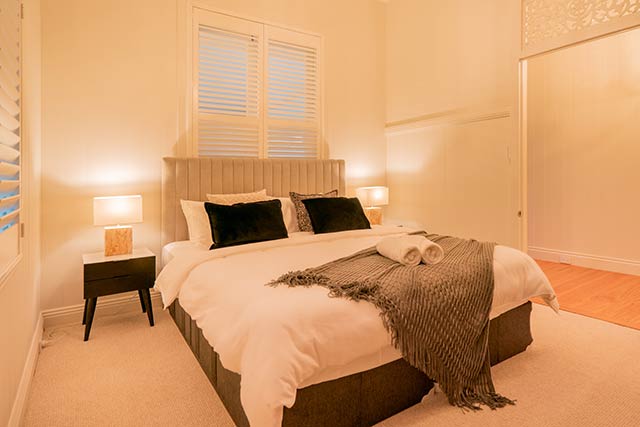
In the final edited photograph, there’s a slightly more reddish-pink tone to it, but without any of that faded or old yellowy look. Instead, it has this nice, natural warmth that feels like it’s radiating from the image. It does exactly what I was asked for — it stands out, feels inviting, and makes people curious enough to click through and actually explore the listing.
With a bit of polishing here and there, everything comes together properly. The velvet pillows now have texture back, the footboard detail is visible again, and the blanket looks clean and smooth with no wrinkles. The walls feel straight, so there’s no weird impression of a crooked or poorly put-together space, and the corners are evenly lit instead of dropping off into darkness. Overall, the colour is consistent across the whole image, which makes it feel like a properly finished, professional photograph. And that usually translates in people’s minds to a professional host, a better experience, and a place they can trust.
This gives potential guests when they land on your listing — a visual experience that grabs attention and gently guides them toward making the right choice.
But First things first — you still need solid material to work with.

This is pretty standard across all my Airbnb and real estate shoots. I use a monopod that gets the camera into tight corners where I or a tripod simply cannot fit. It also helps me to keep a consistent look and achieve a wide depth of field, so the whole room stays sharp even in really dark situations like this.

I don’t mind taking extra time to find the best possible angle — putting the camera behind the bed — inside a wardrobe — or even shower or bath — just to get a more unique perspective and properly show the REAL size of the space.
When you combine that with consistent framing and professional editing, it creates much more immersive feeling, like you’re actually there. And that’s what nudges people one step closer to choosing your listing.
So that’s really the whole point of my photography style.
It isn’t only about showing what the property looks like — it is about shaping how the place feels before someone even arrives. The warmth of the lighting, consistency of colours, perfectly balanced interiors, clean whites, textures, angles, and perspective — all those little details quietly build an impression of comfort, quality, and experience.
And when it all comes together, the photos don feel like documentation anymore they feel like part of the stay itself.